
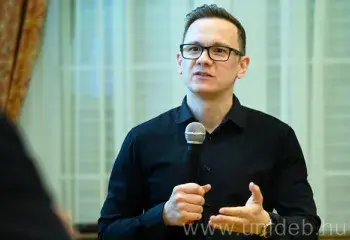
Bertalan Meskó is a “medical futurist” who believes that practical methods of futures studies, like foresight and scenario analysis, should play a greater part in scientific decision-making. In his view, the examination of possible futures and risks could turn out to be helpful in planning research programs more flexibly and in making well-informed decisions concerning research funding. Together with his co-authors, he has published his proposals related to this topic in Nature, one of the most prestigious scientific journals in the world. Meanwhile, Bertalan Meskó is already busy establishing a workshop at the University of Debrecen focused specifically on medical futures studies.
News

A research team at the Faculty of Health Sciences of the University of Debrecen has explored the connection between periodontal disease, as a risk factor for neurodegenerative diseases (NDDs), and its possible inflammatory, microbial and genetic background. The research team members concluded that periodontitis is normally associated with a heightened risk of developing later neuro-degenerative diseases, even after having been accounted for cardiovascular, cerebrovascular, metabolic and inflammatory comorbidities.

Endre Harsányi aims to enhance the innovation activities at the University of Debrecen through building on the multidisciplinary knowledge base of our institution and linking the healthcare industry, agriculture, the automotive industry, robotics, artificial intelligence and other strategic areas. The vice rector responsible for sectoral development reckons that the overall objective is to establish an integrated development system that facilitates closer cooperation among the various faculties, research centers and industrial partners of the university, while increasing the practical application possibilities of research findings and enhancing our international competitiveness at the same time.
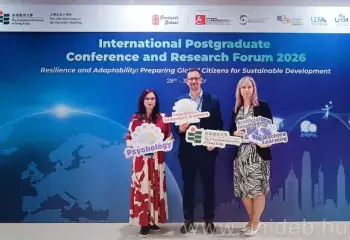
The Education University of Hong Kong (EdUHK), ranked 7th in the QS World University Rankings for Education and Training, hosted an international conference between July 28 and 31 with the participation of researchers from more than twenty different countries. The Faculty of Humanities of the University of Debrecen was also represented at the event, where its delegates presented current research activities conducted at our university and discussed further opportunities for collaboration.

A professor at the Faculty of Music of the University of Debrecen has examined the effects of music on mental health in her latest research. According to Judit Váradi, it is not fully understood yet how the activity of listening to music outside of school affects the emotional development of children or the risk of dementia at a later stage of life for that matter, although there is already some empirical evidence available in this respect, together with scientifically supported findings.
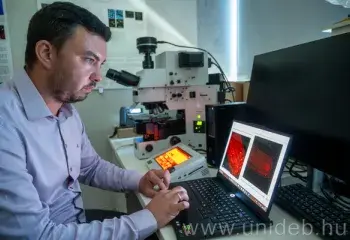
Even low concentration levels of toxins in apparently clean surface waters can be fatal to the plant kingdom, reveals one of the latest studies from the Department of Botany at the Faculty of Science and Technology (TTK) of the University of Debrecen. The study, published in the journal Environmental Pollution, presents at the cellular and molecular levels how toxic substances and herbicides in our environment damage the inner defense mechanisms of plant cells. These internationally significant findings have been recognized with the Count István Tisza Foundation for the University of Debrecen Publication Award.

The list of objectives with which Attila Jenei began his work as Vice Rector for International Affairs include the following items, among other things: the improvement of the international visibility of the university, the expansion of academic, strategic and industrial partnerships, the increase of the practical benefits of international relations, advancing in higher education rankings, strengthening student and researcher mobility, and developing a long-term and sustainable international brand-building and communication strategy for the institution. The director of the Coordinating Center for International Education has been responsible for overseeing the international activities of the University of Debrecen since July 1.

More than 7,800 international students will be able to pursue their studies at the University of Debrecen in the 2026–2027 academic year. According to preliminary data from the Coordinating Center for International Education (CCIE), more than 2,300 freshers will begin their studies in September in first-year programs and preparatory courses, a part of whom might arrive in Hungary as participants in the Stipendium Hungaricum program.

The Mixed Choir of the Faculty of Music of the University of Debrecen and the Bárdos Girls’ Choir have achieved yet another phenomenal international success. These two choirs were invited to perform at the China International Choral Festival (CICF) in Beijing, where they gave remarkably successful concerts in impressive and modern venues with excellent acoustic features. After Beijing, their Chinese tour continued in Chengdu, the capital city of Sichuan Province.
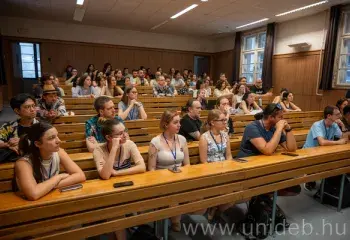
It is for the first time that the Department of English Linguistics at the Institute of English and American Studies, Faculty of Humanities, University of Debrecen, hosts an English-language international linguistics summer course titled OVA 2026 (Omnes Voces Acceptamus 2026). Nearly one hundred students from almost ten countries came to Debrecen for the event, held between July 27 and August 7, 2026, in order to expand their knowledge of linguistics with the help of a distinguished international faculty of instructors.